Home01 Building02 Consulting03 About04 Blog05 Contact06
305-537-6105  ·  [email protected]
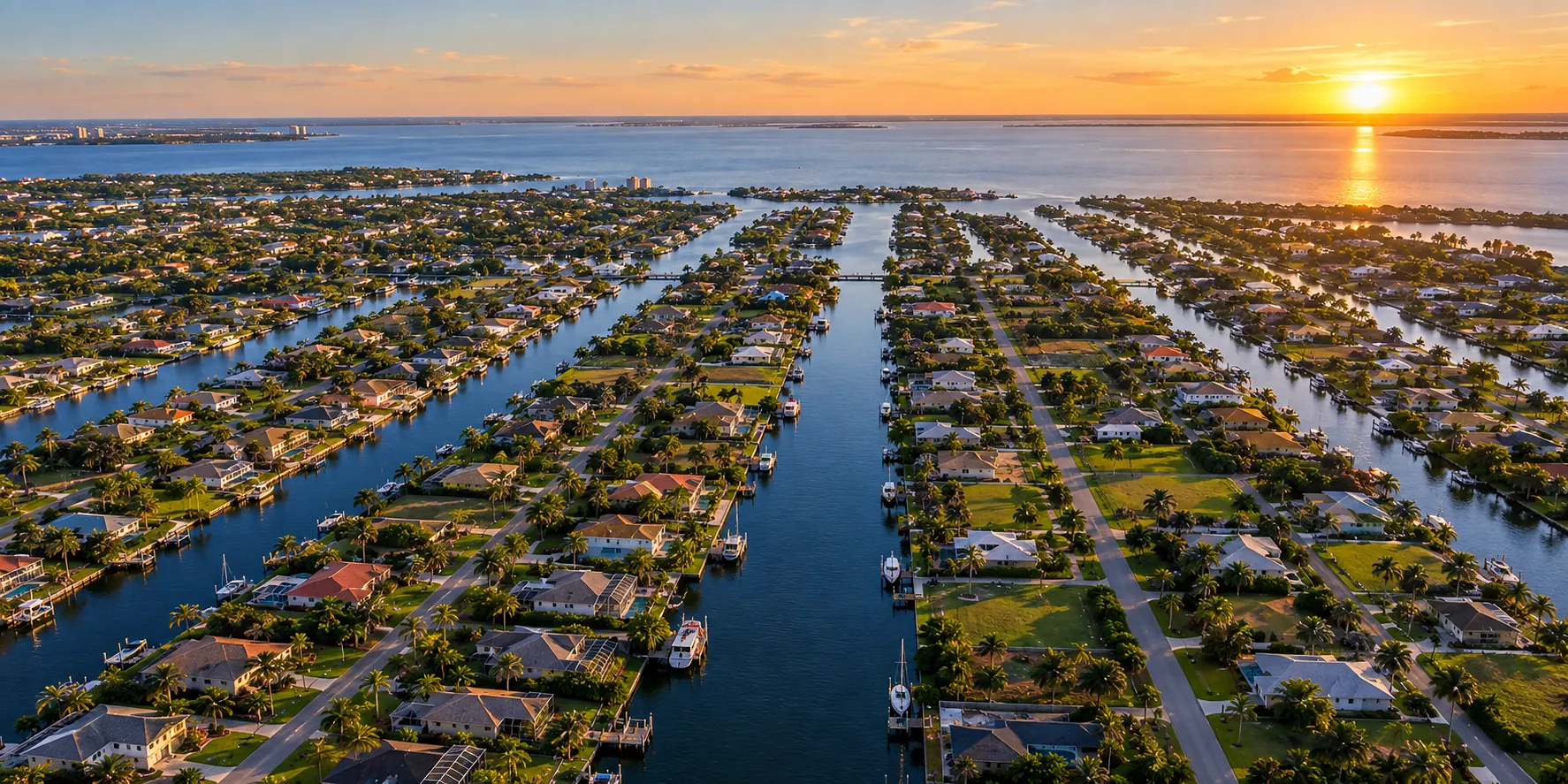
Aerial view at sunset over the canal grid of Port Charlotte, Florida, waterfront homes and open lots opening onto Charlotte Harbor

Home builder in Port Charlotte, Florida.

Custom homes built on your lot, by a licensed general contractor who is also a certified building inspector.

Build on your lot

PALMA Collection
Modern CoastalPort Charlotte, FL
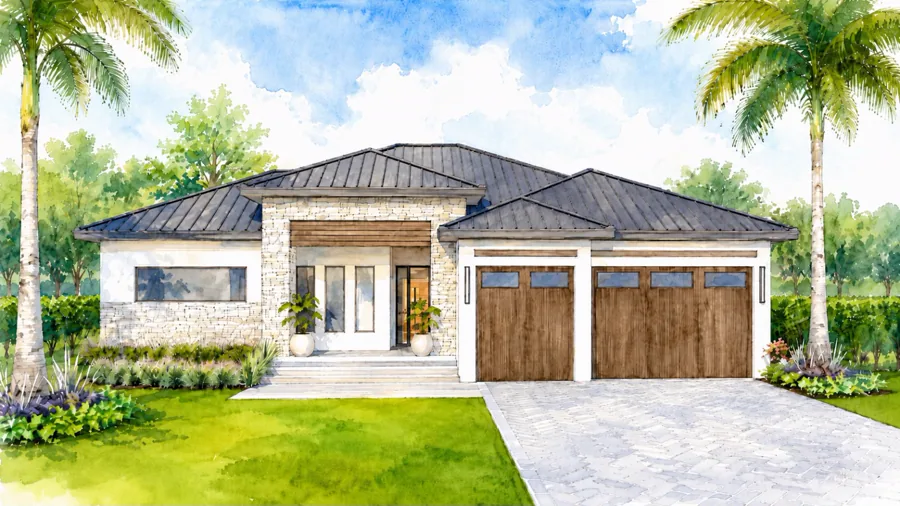
Watercolor rendering of a PALMA Collection custom home with a dark metal roof and stone entry, a plan that can be adapted to a Port Charlotte lot
4Beds3Baths3Cars

How we build here

Building on your lot in Port Charlotte.

Almost every home built in Port Charlotte goes up one at a time, on a single lot the owner already holds. That's the work we do here: a custom home designed around your specific parcel, or one of our existing floor plans adapted to it. Build on your lot guide.

If you haven't bought yet, that's the better conversation. Port Charlotte is one of the few places in Southwest Florida where a buildable lot is still genuinely attainable - and also one of the places where two lots on the same street can carry very different costs to build on.

Your lot

Most Port Charlotte lots were platted before anyone planned to build on them.

This is the single most useful thing to understand about building here.

Port Charlotte wasn't a town that grew. It was a development. Beginning in the late 1950s, the Mackle brothers' General Development Corporation carved roughly 80,000 acres north of Charlotte Harbor into a grid of small rectangular lots across numbered plat sections, expanded the existing drainage canals into hundreds of miles of waterways, and sold the lots by mail order to buyers in Chicago and New York who had often never seen Florida.

Tens of thousands of those lots were sold. Far fewer were ever built on. Which is why, seventy years later, there are still original platted lots scattered across the numbered sections - some passed down, some traded a few times, many still owned by people who have never stood on them.

Deed restrictions

Usually no HOA

Most original General Development lots in the numbered sections carry no mandatory homeowners association - unusual in Southwest Florida, and a real advantage for a custom design. Confirm it for your specific parcel rather than assuming, since some newer infill does carry its own structure.

Water access

Canal or dry

More than 160 miles of canals cross Port Charlotte, dug when the community was drained and platted. The lower-numbered sections near the harbor include saltwater frontage with Gulf access; most inland sections are dry single-family blocks. Two very different building propositions, and the plat section number won't tell you which you have.

Siting

Infill, not subdivision

Your new home will very likely sit between houses built in the 1960s and 1970s. That affects setbacks, drainage across neighboring lots, and what your finished elevation looks like next door - all worth drawing before you commit to a plan.

None of this is a reason to be wary of a Port Charlotte lot. It's a reason to have someone read the parcel before you buy it. Send us an address or a parcel number and we'll tell you what we find, whether or not you end up building with us.

Where we build

Port Charlotte isn't one place, it's about nine of them.

"Port Charlotte" on a listing can mean an original 1960s plat section with no association at all, a deed-restricted canal community with an architectural review committee, or a brand-new master-planned development with a CDD bond attached. Those are three different projects with three different timelines. Here's the shape of it.

Deed restricted

South Gulf Cove

The largest build-on-your-lot market in the county - roughly 15,000 parcels, most of them dry, thousands on a canal network of over 120 waterways. Deed-restricted with real requirements, covered below.

Myakka River

Gulf Cove & Gardens of Gulf Cove

On the Myakka River side, west of the main grid. Gardens of Gulf Cove is a deed-restricted community with amenities and dues; Gulf Cove proper is more mixed. Confirm which one a parcel actually sits in.

Growth corridor

West Port & Murdock

The county's active growth corridor and where a large share of current permit volume sits. Newer master-planned development, which usually means an association and possibly a CDD assessment - check both before you buy.

Gated · golf

Riverwood

Gated golf and country club community off the Myakka. Established, amenity-heavy, and governed - architectural approval and dues apply. A different proposition from an open plat-section lot.

Waterfront

Charlotte Harbor, Grassy Point & Edgewater

The older waterfront edge closest to the harbor and the Peace River. Some of the county's best water frontage, and some of its oldest housing stock - which makes the 50% rule question below unusually live here.

Original plat

El Jobean & the numbered sections

The original General Development grid. Generally no mandatory association, generally the least expensive land, and the widest variation lot to lot in flood zone, utilities, and what it takes to build.

South Gulf Cove specifically, because it has real requirements.

If you're looking at a canal lot in Port Charlotte, there's a good chance it's here, and there are three things worth knowing before you design anything.

Plans go to an architectural review committee first

The deed restrictions apply to every property in South Gulf Cove whether or not you join the homeowners association - membership is voluntary in most sections, the restrictions are not. The ARC reviews and approves plans before construction starts, which makes it a schedule item at the front of the project rather than a formality at the end. This is the same sequencing as Burnt Store Lakes in Punta Gorda: association approval, then the county.

There's a minimum home size

The recorded restrictions set a minimum living area, so a small plan that would be fine on an unrestricted plat-section lot may not be permitted here. Confirm the current figure with the association before you fall in love with a floor plan.

"Gulf access" needs checking lot by lot

The canal system reaches Charlotte Harbor through a lock, and the fixed bridges over it limit mast height. Listings advertise sailboat access freely; whether a specific parcel actually has it depends on which canal it's on and what's between it and the harbor. There are also separate waterway and street-and-drainage assessments in parts of the community that show up on the tax bill and are easy to miss at closing.

Permitting

Getting approved to build in Port Charlotte.

Step 01

One building department, and it's in Port Charlotte

Port Charlotte is unincorporated. There is no City of Port Charlotte and no city building department - every permit here goes through Charlotte County. That makes it simpler than Punta Gorda, where a lot can fall under either the city or the county depending on the parcel.

Charlotte County Community Development, Building Construction Services, is at 18400 Murdock Circle in Port Charlotte - the same department that permits our current projects in Burnt Store Lakes. Applications go through the county's online Citizen Access portal. The Florida Building Code, 8th Edition (2023) applies, along with the county's own zoning, drainage, and floodplain management ordinances.

On licensing, Charlotte County Code makes it unlawful to perform or advertise contracting work without either a state certification or a county-issued Certificate of Competency, and a copy of the state license has to be provided to the county before work starts. Separately, a contractor needs a registered account on the county's permitting portal to file an application or schedule an inspection at all. Worth knowing that Florida has been phasing out local licensing for scopes the state already regulates, so the absence of a county license is not by itself a warning sign - an inactive, void, or wrong-scope DBPR license is.

Step 02

What a complete submittal actually contains

For a new single-family home the county wants, among other things, two signed and sealed surveys less than a year old plus a topographical survey, three site plans showing the structure and its setbacks to property lines, seawall or mean high water line, and any easements, signed and sealed construction plans with truss layouts or framing details, and proof of how the home will be served by water and sewer - either a Charlotte County Utilities application, an approved septic permit, or a letter from the serving utility.

If the lot is in a flood zone, a Certificate of Elevation prepared by a registered land surveyor is required before the relevant inspection. In a V zone, an engineer's or architect's certification is required as well.

This list is the whole game. Review time is far less about the county's speed than about whether what went in was complete.

Step 03

Two changes that took effect July 1, 2026

Septic permits no longer have to be approved first. Under a change to Section 381.0065, Florida Statutes, a homeowner or builder of a single-family residence may no longer be required to have an approved onsite sewage treatment and disposal system permit from the Florida Department of Health before a building or plumbing permit is issued - a receipt showing the OSTDS application was submitted is now enough. Worth knowing that if construction of the system begins before FDOH issues the permit, the property owner or applicant carries the legal and financial risk.

Permit expiration is calculated differently. Permits issued on or after July 1, 2026 generally expire one year after issuance or on the effective date of the next edition of the Florida Building Code, whichever is later, and can be extended by passing inspections.

Step 04

How long it actually takes

Plan a single review pass at roughly two to three weeks, plus intake and sufficiency review before it starts. That is one pass, not a permit in hand. Getting corrections back and resubmitting at least once is normal rather than exceptional, so budget for more than one cycle before the permit issues.

Charlotte County is also processing elevated permit volumes right now, between hurricane rebuilding and new construction in the Murdock and West Port growth corridor. Zoomed out, the real sequence is design, then the building department, and how long that takes depends mostly on how settled your plans are before submittal - which is the part we can control together.

Utilities

County water and sewer, or well and septic.

Charlotte County Utilities serves a large share of Port Charlotte, but not all of it, and the line is not something you can infer from the street. Plenty of lots in the outer numbered sections are still on well and septic, and that changes both what you spend and what your permit package has to contain.

You can check any specific parcel before you buy it. The county takes a Utilities Availability Form for water and sewer - one lot per form, and the street address has to match the short legal description, which you pull from the Charlotte County Property Appraiser's real property record search. It costs nothing and it answers the question definitively.

If the answer is septic, that's not a reason to walk away from the lot. It's a line item, and it belongs in the budget from the start rather than surfacing after you've bought.

Flood zones

Elevation is the number that sets your insurance.

Much of Charlotte County sits in flood zone AE, with Base Flood Elevations that vary lot by lot rather than across the area as a whole. That number determines how high your lowest finished floor has to sit, and it drives your flood insurance premium for the life of the home. It should be pulled for your exact parcel before design starts, not after.

Charlotte County requires at least one foot of freeboard - your finished floor set a foot above Base Flood Elevation rather than level with it. That isn't red tape. Every foot above BFE meaningfully lowers your premium for as long as the house stands, which is a large part of why a new build insures so much better than a 1960s house on the same street.

The county also holds a CRS Class 5 rating under FEMA's Community Rating System, which earns a 25% discount on NFIP flood insurance for policyholders in Special Flood Hazard Areas. Charlotte County has been in the program since 1992, is one of only 68 Class 5 communities in Florida, and is currently working toward Class 4. That discount applies to you regardless of who builds your home - but it exists because the county enforces standards above the FEMA minimum, which is the same reason your elevation gets scrutinized at plan review.

One distinction worth knowing before you read any map: your FEMA flood zone and your hurricane evacuation zone are two different things measuring two different risks, and plenty of homes sit in one and not the other. The county publishes both separately - flood zone and Base Flood Elevation through its Forerunner floodplain platform, and evacuation zones A through E at knowyourzone.charlottecountyfl.gov.

There's also a third designation people miss: the Coastal A Zone, a regulatory area between the V zone and the ordinary A zone where wave action of roughly 1.5 to 3 feet can occur. It carries construction requirements an ordinary AE lot doesn't. If your parcel touches open water, that's worth confirming before design rather than at plan review.

Two elevation certificates are required during construction, not one: an "under construction" certificate before the lintel is poured, so a problem gets caught while it's still fixable, and a final certificate before your last inspection, which is what your insurer uses to set your rate.

You can look up any lot yourself before you buy: FEMA's Flood Map Service Center and Charlotte County's flood information page both publish zone and elevation data directly.

Buying a lot with a house on it

The 50% rule is where cheap gets expensive.

This is the one that decides whether a low-priced Port Charlotte property is a bargain or a trap, and it comes up constantly here because so much of the housing stock predates current elevation requirements.

Charlotte County's floodplain management ordinance applies what it calls the 50% Rule - FEMA's substantial improvement and substantial damage standard. If a structure sits in a FEMA-designated high-risk flood zone and doesn't meet current elevation code, and the cost of improving or repairing it exceeds 50 percent of the building's market value, the whole structure has to be brought up to Florida Building Code standards. Including elevation.

In practice that can mean a renovation you budgeted turns into a tear-down and rebuild, or a lift. Three details decide it.

The number

The value isn't the one you know

The county uses an approximate market value of the structure from the Charlotte County Property Appraiser. It isn't published on the Property Appraiser's website - it has to be requested specifically. It is not your purchase price and not the assessed value you see online.

The scope

You can't phase around it

Splitting work into smaller permits doesn't avoid the threshold. The county counts the value of all permits returning a structure to pre-storm condition toward the 50% evaluation, counts open permits toward it, and reviewers check whether an application describes all the work actually required.

The timing

It's determined before you start

Before improving or repairing a structure in a high-risk zone you apply for a permit and generally submit a Detailed Cost Breakdown with an affidavit from an architect, engineer, contractor, or the owner. An owner affidavit requires photo documentation of the structure and any damage.

Reading that determination before an offer goes in is exactly the kind of work James does as a consultant and as a retained expert witness, and it's the reason we'd rather look at a property early than be handed a renovation budget that was never going to survive review. Sometimes the honest answer is that the existing house should come down and the lot is still a good buy. Sometimes it's that you should keep looking.

The county's own 50% FEMA Rule page is worth reading directly if you're considering anything with a structure already on it.

Insurance

The number that decides what you actually pay every month.

Ask anyone who lives in Charlotte County what surprised them most about moving here and the answer is rarely the purchase price. It's the insurance.

There's a reason, and it isn't only the weather. Charlotte County was directly in Hurricane Ian's path, and carriers still price that history into this county. It didn't stop there either: across Debby, Helene and Milton in the autumn of 2024, Charlotte County led all of Southwest Florida in flood insurance claims filed - ahead of Lee County, which has roughly four times the population. Roof age has become the single most decisive underwriting factor in Florida: many carriers won't write a new policy on a roof older than fifteen years at all, and in higher-risk coastal markets some have moved that threshold closer to ten. A 1970s block house with an aging roof and no opening protection is, for a lot of carriers, simply not a risk they'll take at any price you'd want to pay.

This is the part of the comparison that gets left out when people weigh buying an existing Port Charlotte home against building new. A newer home built to current wind and flood standards - impact-rated openings, an engineered roof system, a finished floor set above Base Flood Elevation - is materially cheaper to insure than older stock in the same ZIP code, and the gap runs for the life of the home rather than being a one-time saving.

Florida law also requires every insurer in the state to offer a premium discount for verified wind-resistant features, documented through a standard wind mitigation inspection. That inspection is done by an independent inspector, not by us, and we'll point you to ones we trust once your home is finished. How we build for it.

We won't quote you a premium. Rates move, they're set by carrier and by address, and anyone giving you a number without your parcel is guessing. What we will tell you is that this belongs in the conversation early - get a quote on a specific lot and a specific plan before you finalize the design, not after.

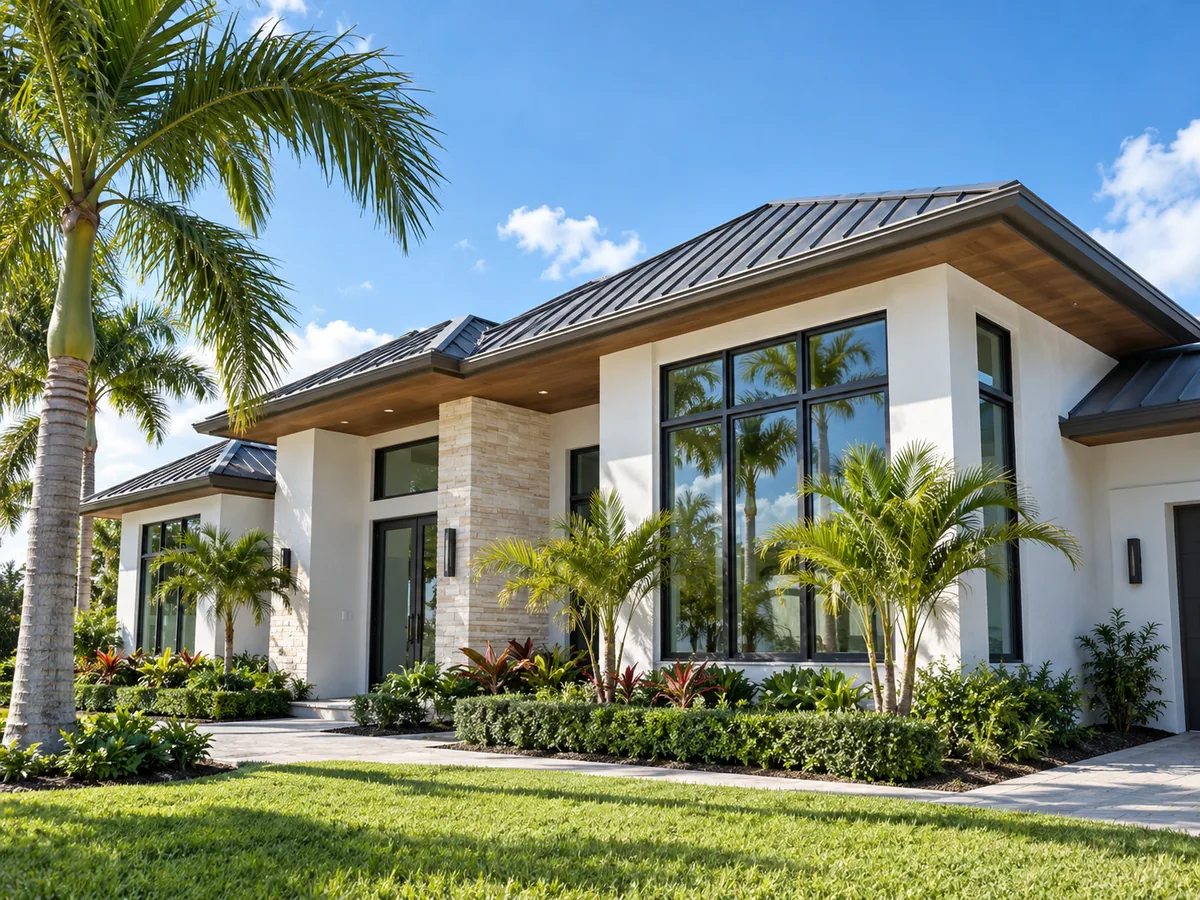
A Cloud Design Build home with a standing-seam aluminum roof and tall impact-rated windows, framed by palms
Built past codeMiami-Dade rated products · impact windows · aluminum roof

More ways to build

Built for Florida, not just built to code.

Charlotte County sits in the Wind-Borne Debris Region, which means impact windows or approved shutters on new construction. We build past the requirement - Miami-Dade rated products, engineered roof systems, and a continuous load path accounted for from the first drawing rather than added at the end.

Cost

What it costs to build in Port Charlotte.

Port Charlotte has a reputation as the affordable place to build on this coast, and that reputation is earned - the land costs less here than in Punta Gorda, Cape Coral, or Sarasota. It's worth being precise about what that does and doesn't mean.

What's cheaper is the lot. The house is not meaningfully cheaper to build, because the code, the labor, the materials, and the wind and flood requirements are the same as anywhere else in Southwest Florida. Our custom home costs start around $270 per square foot and go up from there depending on size, materials, elevation, and site work.

Why the MLS shows brand-new homes for less than we quote

You will see new construction in Port Charlotte listed well under our starting number - four-bedroom homes finished this year in the high $200,000s. Those are real, and they're not a trick. They're a different product, and it's worth understanding the difference before you decide which one you want.

Those are production homes: one plan repeated across dozens of lots, a fixed specification, and no design phase. The builder buys materials by the hundred, not by the house. That model is genuinely efficient, and for plenty of buyers it's the right answer - if the plan fits your lot and your life, you will not beat the price.

What you're trading away is the part that costs money: a home designed around your specific parcel rather than dropped onto it, elevation and drainage worked out for your lot rather than a subdivision average, product specifications you choose rather than inherit, and someone accountable to you personally rather than to a build schedule. On a canal lot, an odd-shaped parcel, or anything where the site drives the design, that stops being a preference and becomes the whole project.

We'd rather say that plainly than pretend the comparison doesn't exist. If a production home fits what you need, buy one - we'll tell you so. If it doesn't, you now know what the difference is paying for.

A worked example, since everyone asks

What actually moves the number on a custom project here is usually the parcel, not the plan. Does it need fill to reach the required elevation? County water and sewer, or a well and a septic system? A seawall, or a dock? Is there a structure on it, and does the 50% rule apply? Those items don't shift a budget by a few percent. They decide it.

Take a 2,000 square foot home, which is roughly the size most people picture. At $270 to $400 per square foot and up, that's about $540,000 to $800,000 and beyond, for the house alone. It does not include the lot, and it does not include what your particular lot needs before a house can go on it: fill, a stemwall, a well and septic system if there's no county service, a seawall if you're on a canal, or demolition if something's already standing there.

That's why the honest answer to "what does it cost per square foot" is a range wide enough to be almost unhelpful on its own. The narrow, useful number only exists once someone has looked at your parcel. We'd rather give you that one.

Send us the address or the parcel number - even if you haven't bought it yet - and we'll walk you through what that specific lot will and won't cost you, item by item, before design gets ahead of the numbers.
Why Cloud Design Build

The person who inspects other builders'
work, building yours.

Port Charlotte is a market where two things are usually true at once: the land is more affordable than almost anywhere else on this coast, and the reason it's affordable is something specific about the parcel. Flood elevation, whether the lot has county water and sewer or needs a well and septic, and what's already standing on it, if anything is.

That combination matters more here than in most markets. A great many Port Charlotte lots come with an older structure or a complicated history, and telling a genuine bargain from an expensive mistake is a code question before it's a design question.

  • Florida General Contractor (CGC1520746), plus roofing, mechanical, plumbing, and pool/spa contractor licenses.
  • Licensed Florida Real Estate Broker and Community Association Manager.
  • ICC-certified residential & commercial building inspector, and OSHA 30 certified.
  • B.S. in Construction Management and M.S. in International Real Estate, both from Florida International University.
  • Author of "Trouble in Paradise: Pitfalls of Buying an Existing Home."
  • Retained by real estate developers, property owners, law firms, and insurers as a construction expert.
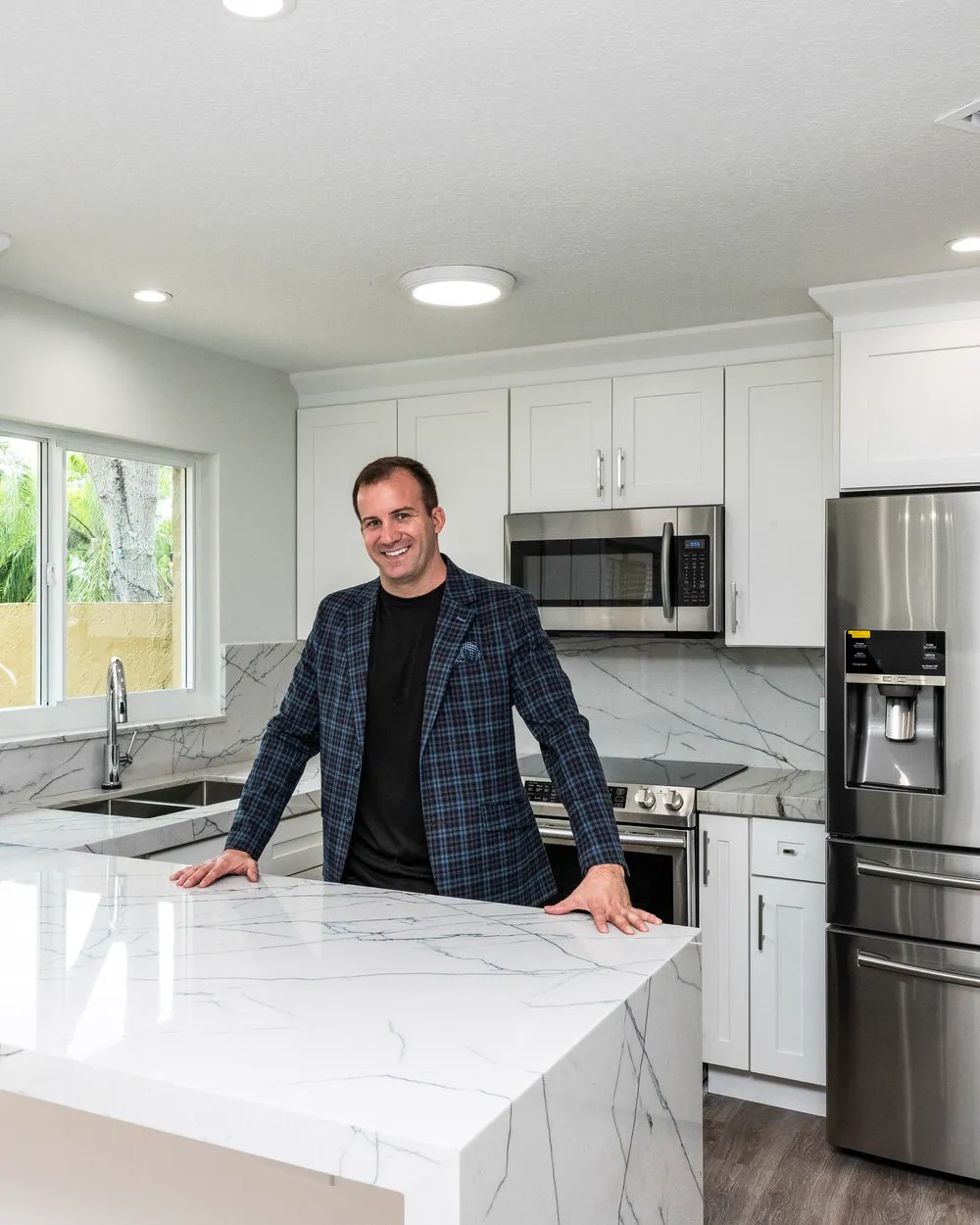
James J. Cloud, founder of Cloud Design Build, standing in a completed Cloud Design Build kitchen

Learn more

Everything you need to know before you build here.

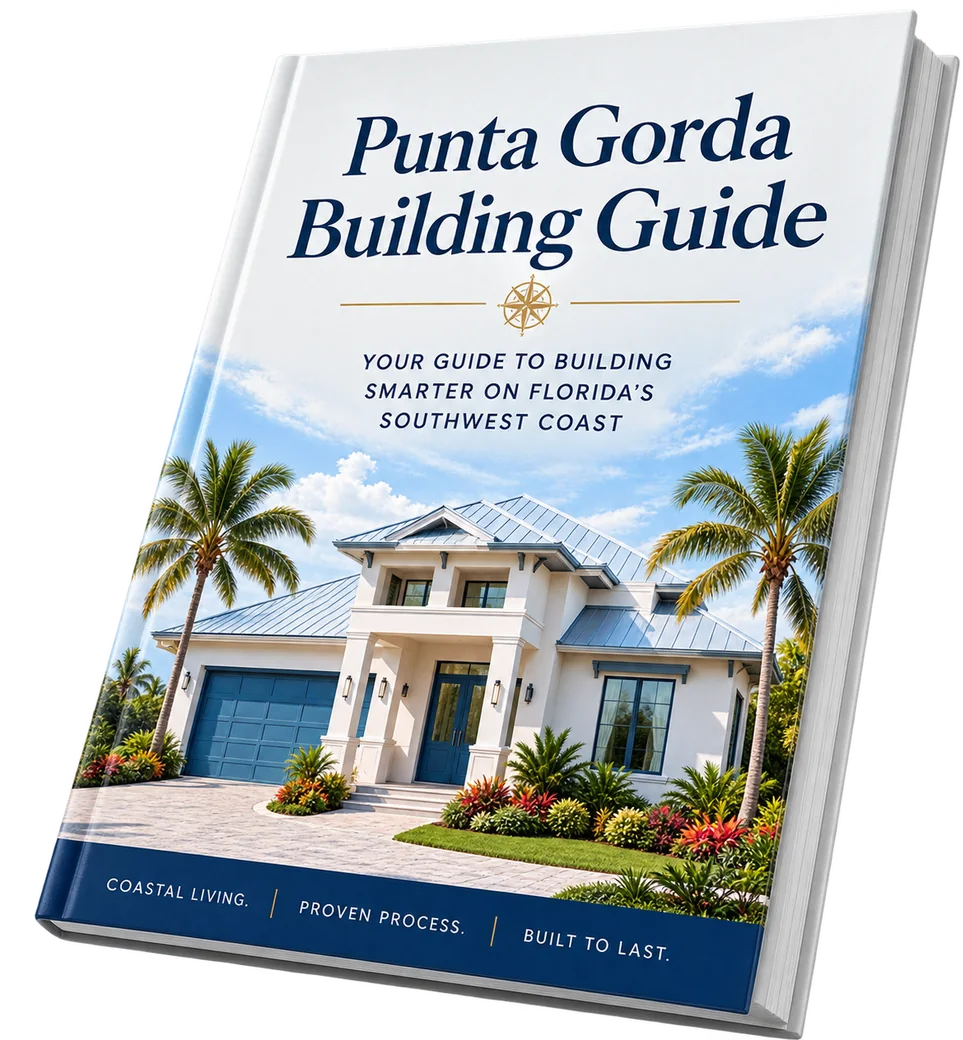
James wrote a complete guide to building in this market - cost, permitting, flood zones, hurricane code, and what to expect if you're moving from out of state. It's written around Punta Gorda, but the Charlotte County permitting, flood zone, and building code sections apply to Port Charlotte identically.

The Punta Gorda Building Guide by Cloud Design Build - cover showing a coastal custom home framed by palms

Questions

Building in Port Charlotte, answered.

Yes - that's most of what building in Port Charlotte looks like. We design around your specific parcel or adapt one of our plans to it. See the build on your lot guide.
The county. Port Charlotte is unincorporated, so there's no city building department - everything goes through Charlotte County Community Development at 18400 Murdock Circle. That's simpler than Punta Gorda, where a lot can fall under either jurisdiction.
That often isn't a preference, it's a determination. If the structure is in a high-risk flood zone and doesn't meet current elevation requirements, Charlotte County's 50% rule decides it: repairs or improvements costing more than half the building's market value trigger full code compliance, including elevation. We'd want to look at that before you make an offer, not after.
Maybe. Charlotte County Utilities serves much of Port Charlotte but not all of it, and you can't tell from the street. Submit a Utilities Availability Form for the specific parcel - one lot per form, with a short legal description from the Property Appraiser - and you'll get a definitive answer before you buy.
Most original General Development lots in the numbered plat sections don't have a mandatory association, which is unusual for this coast and gives you real freedom on design. It's still worth confirming for your parcel, since some newer infill development carries its own structure or assessments.
In a high-risk zone with a federally backed mortgage, your lender will require it. It's separate from your homeowners policy. How much you pay depends heavily on how far above Base Flood Elevation your finished floor sits, which is set during design and can't be fixed later.
No, and this trips up almost everyone. They measure different risks and are published separately. Your FEMA flood zone and Base Flood Elevation come from the flood maps and drive your insurance and how high the house has to sit. Your evacuation zone, A through E, comes from the county and tells you when to leave. A home can easily be in one and not the other. Check both at the county's flood page and at knowyourzone.charlottecountyfl.gov.
Yes. The county holds a CRS Class 5 rating under FEMA's Community Rating System, which earns a 25% discount on NFIP flood insurance for policyholders in Special Flood Hazard Areas. It has been in the program since 1992 and is working toward Class 4. The discount applies countywide, whoever builds your home - though how far above Base Flood Elevation your floor sits is separate, and that part is decided during design.
Charlotte County was directly in Hurricane Ian's path and carriers still price that history in. Roof age is now the most decisive factor in Florida underwriting - many carriers won't write a policy on a roof older than fifteen years. A new home built to current wind and flood standards, with impact-rated openings and a finished floor above Base Flood Elevation, generally insures better than older stock nearby, and Florida law requires insurers to offer a discount for verified wind-resistant features. Get a quote on your specific lot and plan rather than relying on any published average.
Mostly because the land is. Port Charlotte was platted in the late 1950s as a mass-market development, tens of thousands of lots were sold, and far fewer were built on - so supply has stayed ahead of demand for seventy years in a way it hasn't in Punta Gorda or Cape Coral. The other reason is the age of the housing stock: a lot of what's for sale predates current elevation and wind requirements, which is what makes it cheap to buy and expensive to insure, repair, or improve. New construction here isn't meaningfully cheaper than anywhere else in Southwest Florida. The lot is.
Our custom homes start around $270 per square foot and can reach and exceed $400, depending on size, materials, elevation, and finishes. On a 2,000 square foot home that's roughly $540,000 to $800,000 and up for the house itself, before the lot and before site work. Fill, a septic system, or a seawall can each move that materially, which is why we price from the parcel rather than from a headline figure.
Ask for the license number and verify it yourself with the Florida DBPR, including whether the trade licenses are held by the builder or subcontracted out. Ask whether they're registered with Charlotte County, since a state license alone doesn't let anyone pull a permit here. Look at the permit history on the county's Citizen Access portal, not just the portfolio. And bring in an independent inspector at key milestones rather than only at the end - it's a small cost, and any builder confident in their work should welcome it. We'd tell you to do all of that with us too.
Charlotte County. This gets confused often, because the Port Charlotte plat sections run north toward the county line and some listing sites tag parcels by the nearest incorporated city rather than by jurisdiction. The distinction matters for permitting, utilities, taxes, and schools, so it's verified from the parcel, not the mailing address.
Same county, same building code, same flood and wind requirements. The practical differences are that Punta Gorda has a city building department for lots inside city limits while Port Charlotte is entirely county-permitted, and that Port Charlotte's original platted lots are generally more available and less expensive. The house itself costs about the same to build in either.
The standard original General Development lot is 80 by 125 feet - about 10,000 square feet, or roughly a quarter acre. That fits a custom home comfortably. The constraint is usually setbacks rather than width, and on canal lots the water setback specifically. We draw the buildable envelope first and design inside it.
Often, yes, and it's a common move here because adjacent original lots do come up. It can be done by combining both and centering the home, or by building on one and holding the second as a landscaped buffer you can sell later. County rules can change, so we confirm the current process before a plan depends on it.
In parts, yes. The county is still processing elevated permit volumes from a mix of storm rebuilding and new construction. For someone building new that mostly shows up as review queues and trade availability rather than as anything structural. For someone buying an existing home, it's the reason the 50% rule question above matters so much.
Yes. James holds a Florida Real Estate Broker license in addition to his contractor licenses, so lot evaluation isn't handed off to a third party - the person assessing the parcel's flood zone, utilities, and buildable area is the same person who'd build on it.
Construction typically runs 10 to 14 months. Before that comes design and permitting, which moves faster on one of our existing plans than on a fully custom design, and faster still when the lot's flood zone, utilities, and elevation were checked before you bought it. Most of what stretches a schedule here is discoverable up front.
The land usually is. The house isn't, or not by much - the building code, the wind and flood requirements, the labor and the materials are the same across Charlotte County. What varies is the site work a particular parcel needs, which is why we price from the parcel rather than from a per-square-foot headline.
Yes. Cloud Design Build's home market is Punta Gorda, and we also serve Cape Coral, Fort Myers, and Sarasota - see our building page for the wider service area.

Start a conversation

Let's talk about your lot in Port Charlotte.

Whether you already own the land, inherited it, or you're still comparing parcels, the most useful conversation happens before the lot is bought - and you'll have it directly with the people who do the work.