Roofing defect investigations.
Roofing defects in Florida range from installation failures on new construction to substrate and structural issues that compromise the entire roof assembly. Flat roofs, tile roofs, and shingle roofs each present distinct failure modes that require evaluation by someone with active, field-level roofing experience to properly identify and document.
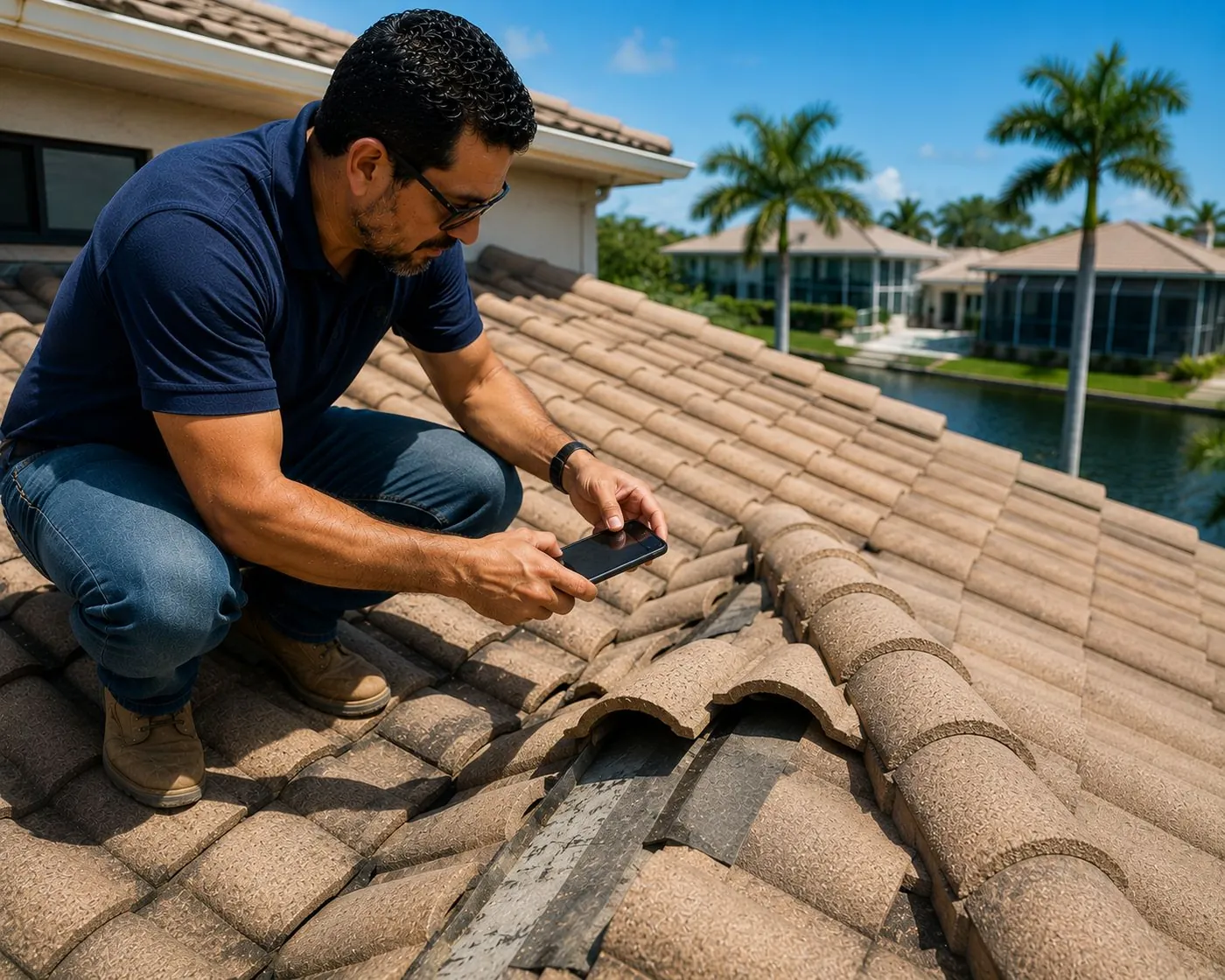
Overview
Florida Roofing Defect Consulting and Expert Witness Services
Roofing defects are common and costly construction claims in Florida. The state's climate demands more from roofing systems than almost anywhere else in the country - intense UV exposure, high heat, frequent heavy rainfall, wind-driven moisture, and hurricane-force wind events put every component of a roof assembly under continuous stress. When a roofing system is improperly designed, incorrectly installed, or built with non-compliant materials, the consequences for property owners can be significant and far-reaching.
Roofing defect claims in Florida span a wide range of conditions - from flat roof drainage failures and membrane deficiencies on commercial and condominium buildings, to tile and shingle installation failures on residential and luxury properties, to re-roofing work that fails to address underlying substrate and structural conditions before new materials are applied.
Cloud Design Build provides roofing defect investigation, consulting, and expert witness services throughout Florida, assisting property owners, attorneys, developers, contractors, and insurers in evaluating roofing defect conditions and supporting dispute resolution. These services are part of Cloud Design Build's broader Construction Claims Consulting practice and may include site inspections, roof system assessments, document review, written reports, and litigation support.
Flat roofs
Flat and Low-Slope Roof Defects
Flat and low-slope roofing systems are commonly used on commercial buildings, condominium structures, and residential properties with flat or minimally pitched roof sections throughout Florida. These systems require careful design and installation to manage water effectively, and failures in flat roof construction are common roofing defect conditions.
Slope and Drainage Deficiencies
Proper slope is a fundamental requirement of flat roof performance. Florida Building Code and industry standards establish minimum slope requirements for low-slope roofing assemblies to ensure that water drains off the roof surface rather than ponding. When flat roofs are not built to the slope shown on the approved drawings, or when the slope is inadequate to drain water effectively, ponding occurs - accelerating membrane deterioration, increasing structural load, and creating conditions for water infiltration. Structural analysis of the roof framing and deck is for a licensed engineer.
Slope deficiencies on flat roofs can originate in multiple locations in the construction assembly:
- Trusses or structural framing not built to the slope specified in the structural drawings, creating a flat or reverse-sloped deck before any roofing materials are applied
- Tapered insulation not specified, not installed, or incorrectly installed - tapered insulation is a critical component of flat roof assemblies that provides slope where the structural deck is flat, and when it is missing or improperly installed the roof will not drain as designed
- Improper field modifications to the roof assembly that alter the as-designed slope conditions
Membrane System Failures
The membrane is the primary waterproofing layer of a flat roof assembly and must be correctly selected, detailed, and installed to perform as intended. Common membrane system failures in Florida flat roof construction include:
- Wrong membrane product for the application - using an SBS modified bitumen, built-up roofing, or single-ply membrane system that is not appropriate for the project conditions, substrate, or exposure
- Incorrect application methods - SBS and bitumen systems require specific installation temperatures, application rates, and lap conditions that must be followed precisely to achieve a watertight assembly
- Improper or missing flashings at roof edges, penetrations, and transitions - flashing details are critical and commonly deficient components of flat roof assemblies
- Flat spots and ponding areas resulting from inadequate slope or substrate irregularities that are not corrected before membrane installation
- Membrane damage during or after installation that is not properly repaired before the system is covered or put into service
Drainage System Deficiencies
Flat roof drainage systems including internal drains, scuppers, collectors, and downspouts must be properly sized, located, and installed to manage the roof's drainage requirements. Common drainage system deficiencies include:
- Internal drains that are improperly flashed where they penetrate the membrane - internal drain connections are a common source of active leaking on flat roof systems and require careful waterproofing detail
- Scuppers that are not properly flashed at the wall penetration - scuppers that penetrate parapet walls without adequate flashing and waterproofing allow water to bypass the membrane and enter the wall assembly
- Scuppers and downspouts that are incorrectly sized - either too small to handle the roof's drainage load during heavy rainfall events, or oversized in a manner that creates velocity or attachment issues
- Underground drainage systems that are incorrectly sized, improperly sloped, or connected to systems that cannot handle the drainage volume from the roof
- Collector boxes and downspout connections that are not watertight, allowing water to escape at the connection points
Skylight Failures
Skylights on flat and low-slope roof systems present specific installation challenges in Florida's climate. Common skylight failures include:
- Improper flashing at the skylight curb - the transition between the skylight curb and the roof membrane is a critical waterproofing detail that, when improperly executed, allows water to bypass the membrane and enter the building
- Skylight products that are not rated for Florida's UV exposure, high heat conditions, or applicable wind speed requirements - skylights that are not specified or approved for the project's exposure conditions can fail prematurely
- Inadequate curb height that does not provide sufficient clearance above the finished roof surface to prevent water intrusion during heavy rainfall or ponding conditions
- HVHZ product approval requirements for skylights in Miami-Dade and Broward Counties that must be verified before installation
Tile
Tile Roof Defects
Concrete and clay tile roofing is among the most common roofing systems in South Florida residential construction and is a significant source of roofing defect and property damage claims. Tile roofs are durable when properly installed but are susceptible to specific failure modes that are frequently encountered in Florida construction disputes.
Tile Cracking and Brittleness
Tile cracking is a common defect condition on Florida tile roofs. Concrete and clay tile are inherently brittle materials that crack under impact loading, foot traffic during maintenance or inspections, and in some cases from improper handling during installation. When cracked tiles are not identified and replaced, they provide pathways for water infiltration that can damage the underlayment, sheathing, and interior of the building over time.
Transition and Flashing Deficiencies
Transition details and flashing installations on tile roofs are critical and commonly deficient components of the roofing assembly. Common tile roof transition and flashing failures include:
- Hip and ridge failures where the hip and ridge tiles are improperly set, inadequately mortared or fastened, or where the underlying flashing is missing or deficient
- Valley flashing deficiencies where the valley is not properly flashed and integrated with the tile system to direct water away from the roof structure
- Wall and vertical surface transitions where the tile system terminates at a wall or parapet without proper step or counter flashing
- Penetration flashing failures at vents, pipes, and electrical service entries through the roof - these penetrations are a common source of water intrusion on tile roofs and require careful flashing and sealant detail
- Flashing failures at electrical service entry points through the roof - where power enters the building through the roof plane, improper flashing and sealant application is a common source of water intrusion
Underlayment Deficiencies
The underlayment beneath tile roofing provides secondary water resistance and must be properly installed to perform as the last line of defense when the tile system above it is compromised. Underlayment deficiencies on tile roofs include improper product selection, inadequate lap conditions, improper fastening, and damage during tile installation that is not identified and repaired before the tile is set.
Mortar and Mechanical Fastening Issues
Tile roofs in Florida may be installed using mortar-set or mechanically fastened methods, each with specific requirements under the Florida Building Code and applicable product approvals. Installation failures may involve improper mortar mix or application, inadequate mortar coverage, use of mechanical fasteners that do not meet the wind resistance requirements for the project location, or failure to follow the approved installation method required by the product's Florida Product Approval or NOA.
Shingle
Shingle Roof Defects
Asphalt shingle roofing is common in Florida residential construction, particularly in Central and North Florida and in production home communities throughout the state. Shingle roofs in Florida are subject to specific failure conditions related to wind resistance, installation quality, and substrate performance.
Wind Resistance and Product Selection
One of the most significant shingle roofing issues in Florida involves the use of shingle products that are not rated for the wind speeds applicable to the project location. Florida's wind speed map establishes design wind speeds that vary across the state, and shingles must be rated and installed to resist those speeds. When shingles are specified or installed that are not designed for the applicable wind exposure, wind-related failures are more likely - and determining whether a roofing failure resulted from inadequate product selection rather than storm damage is an important part of many Florida roofing defect evaluations.
Nail Pattern and Installation Deficiencies
Improper nail patterns are common installation defects on shingle roofs. The Florida Building Code and shingle manufacturer requirements establish specific nail placement locations, nail type, and fastener count per shingle. When nails are placed outside the manufacturer's nailing zone, or when the wrong nail type or count is used, the shingle's wind resistance is significantly reduced. These deficiencies may not be visible from the exterior but can be identified through systematic evaluation of the installation.
Truss and Substrate Issues
Truss and framing irregularities can affect the finished roof surface. When adjacent trusses are at slightly different elevations, the sheathing over them can take on a ridge or crease that shows through the underlayment and shingles. Cloud Design Build documents the visible condition and its effect on the roofing materials. Whether the framing meets structural requirements is a question for a licensed engineer.
Plywood Deck Deficiencies
The plywood sheathing that forms the roof deck is the substrate for all roofing materials above it and must be properly selected, installed, and fastened to provide a sound base for the roofing system. Common plywood deck deficiencies encountered in Florida roofing defect evaluations include:
- Plywood panels installed with height differentials between adjacent sheets - a raised panel edge creates a ridge in the deck that telegraphs through underlayment and finished roofing materials, causes stress concentrations in the roofing system, and can lead to premature cracking and failure of the materials at that location
- Inadequate fastening of the plywood deck - nail patterns and fastener types for roof sheathing are specified in the structural documents and the Florida Building Code, and inadequate fastening affects both the deck's structural performance and wind uplift resistance - structural and wind uplift analysis is for a licensed engineer
- Plywood thickness that does not meet the requirements of the structural drawings or applicable code provisions
- Damaged or deteriorated plywood that was not identified and replaced before new roofing materials were applied
Flashing Deficiencies on Shingle Roofs
Flashing failures on shingle roofs are a significant source of water intrusion claims. Common shingle roof flashing deficiencies include:
- Vent pipe flashing failures - improperly installed or deteriorated vent pipe flashings are a common source of active water intrusion on shingle roofs
- Electrical service entry flashing - where power enters the building through the roof, improper flashing and sealant at the service entry is a common water intrusion point
- Step and counter flashing at wall intersections that is improperly installed or missing
- Drip edge installation deficiencies at eaves and rakes
- Valley flashing failures
Re-roofing
Re-Roofing Defects and Failures
Re-roofing projects present a distinct category of roofing defect conditions that differ from new construction failures. When a roof is replaced, the contractor is generally expected to properly remove existing roofing materials, evaluate the condition of the substrate, identify and address any underlying deficiencies, and install the new roofing system in compliance with current code requirements. Failures at these steps are a significant source of re-roofing defect claims.
Improper Removal of Existing Materials
A proper re-roof begins with complete and careful removal of existing roofing materials. Deficiencies in the removal process can affect the new roof's performance and compliance, and may include:
- Incomplete removal of existing roofing layers that exceed the maximum number of layers permitted by the Florida Building Code
- Damage to the roof deck or structural framing during removal that is not identified and repaired before new materials are applied
- Failure to remove existing flashings and start fresh with new flashing systems that integrate properly with the new roofing materials
Substrate Inspection and Code Compliance
Once existing roofing materials are removed, the contractor is generally expected to inspect the exposed substrate and structural components before installing new materials. Common re-roofing failures at this stage include:
- Failure to inspect and repair or replace deteriorated, damaged, or structurally deficient plywood sheathing before new roofing is applied
- Failure to verify truss strap connections where an upgrade is required - whether a re-roof triggers hurricane strap upgrades depends on the code edition, the jurisdiction, and the building
- Failure to verify and update nail patterns on the plywood deck to current code requirements
- Failure to verify that the plywood thickness meets current code requirements and replacing undersized panels before new materials are applied
- Covering a deck with raised panel edges or surface irregularities that should be corrected before new materials are installed - as noted above, even small height differentials between adjacent plywood panels can cause long-term failures in the roofing materials applied above them
Investigation
How Cloud Design Build Investigates Roofing Defects
Effective roofing defect investigation requires evaluating not just the visible surface of the roofing system but the full assembly - from the structural framing and deck through the underlayment, membrane or tiles, and all flashing and drainage components. Cloud Design Build's roofing investigations are structured to identify the specific conditions that caused or contributed to the defect and to develop a defensible record of the failure conditions and their causes.
Depending on the scope of the engagement, a roofing defect investigation may include:
- Site inspection and photographic documentation of roofing conditions and defect evidence
- Evaluation of roof system type, age, and overall condition
- Assessment of slope, drainage, and ponding conditions on flat and low-slope roofs
- Review of membrane system installation, flashing details, and penetration conditions
- Evaluation of tile, shingle, or other roofing material installation against manufacturer requirements and applicable product approvals
- Review of Florida Building Code compliance including wind resistance requirements and HVHZ product approval conditions
- Assessment of plywood deck condition, nail pattern, and panel alignment
- Review of re-roofing work including substrate condition and code update compliance
- Review of construction documents, specifications, submittals, and product approvals
- Development of repair scope and cost to repair estimates
- Preparation of written investigation reports and expert opinions
- Litigation support including deposition preparation and trial testimony
Credentials
Why Cloud Design Build
Evaluating roofing defects effectively requires more than familiarity with roofing products and code requirements. It requires active, field-level experience with how roofing systems are actually installed, inspected, and where they fail in Florida's specific climate and market conditions.
Cloud Design Build is led by James J. Cloud, a Florida Licensed Roofing Contractor and Florida Certified General Contractor, with ICC building inspector certifications across residential and commercial construction. As a Florida Licensed Roofing Contractor and Certified General Contractor, James evaluates roofing systems based on his experience overseeing and inspecting roofing work on residential and commercial projects in Florida.
That combination of active roofing contractor licensure and construction management experience provides a level of practical authority on roofing defect conditions that is directly relevant to how these cases are evaluated and resolved.
Cloud Design Build's consulting and expert witness services are listed with the SEAK Expert Witness Directory, JurisPro Expert Witness Directory, and Expert Pages.
Questions
Roofing defect investigations, answered.
Schedule a consultation
Discuss your matter with James directly.
Cloud Design Build accepts roofing defect investigation and expert witness engagements throughout Florida, including Miami-Dade, Broward, Palm Beach, Collier, Charlotte, and surrounding counties. To discuss a matter, contact us to schedule a consultation.