Construction defect investigations.
A construction defect is any condition in which a building component, system, or installation fails to perform as intended due to deficiencies in design, materials, workmanship, or failure to comply with applicable plans, codes, or industry standards.
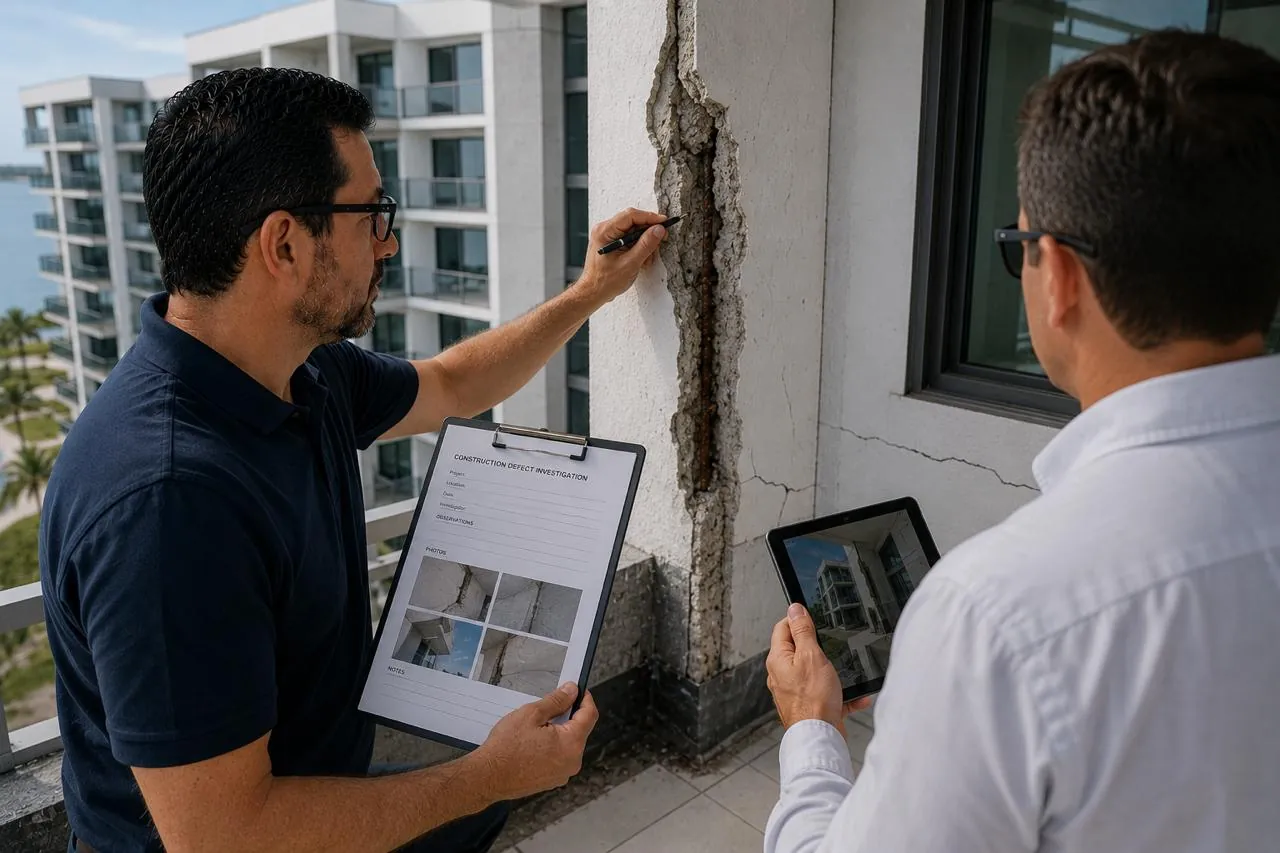
Overview
Florida Construction Defect Consulting and Expert Witness Services
Construction defects occur across every segment of the Florida building market - from production homes and entry-level residential construction to ultra-luxury custom estates, condominium buildings, and commercial projects. When a defect is discovered - whether during construction, shortly after completion, or years later - the path forward typically requires an independent technical evaluation to determine the cause and extent of the deficiency, identify the trades and scopes of work involved, and assess what corrective work is required.
Cloud Design Build provides construction defect investigation, consulting, and expert witness services throughout Florida, assisting property owners, attorneys, developers, contractors, insurers, and associations in evaluating construction defect conditions and supporting dispute resolution. These services are part of Cloud Design Build's broader Construction Claims Consulting practice and may include site inspections, document review, expert reports, and litigation support.
Definition
What is a Construction Defect?
A construction defect is a deficiency in design, materials, or workmanship that reduces a building's value, creates safety concerns, or causes property damage. Construction defects may affect a single component or multiple building systems, and may involve one contractor or multiple parties with overlapping scopes of work.
Florida law and industry practice recognize two primary categories of construction defects:
Patent Defects: Visible and apparent upon reasonable inspection. Examples include improper tile installation, visible stair deficiencies, incorrect material placement, and observable waterproofing failures on balconies or decks.
Latent Defects: Hidden within building assemblies and may not become apparent until months or years after construction is complete. Examples include water infiltration concealed behind exterior cladding, improper substrate preparation beneath tile or flooring systems, and waterproofing failures that only manifest after sustained weather exposure.
The distinction between patent and latent defects matters significantly in Florida construction litigation. It affects the applicable statute of limitations, the pre-suit notice requirements under Chapter 558, Florida Statutes, and how claims are evaluated and resolved.
Construction defects may also be categorized by origin: design deficiencies where the plans or specifications themselves are inadequate; material deficiencies where inferior or non-specified products are installed; workmanship deficiencies where installation does not meet applicable standards; and subsurface deficiencies involving site conditions that affect foundation or drainage performance.
Market
Construction Defects in Florida's Building Market
Florida's construction market presents a unique combination of conditions that contribute to a significant volume of construction defect claims. Rapid development cycles, high construction volume, subcontractor coordination across large communities, and the state's climate and hurricane exposure all play a role in how defects develop, accumulate, and are ultimately discovered.
Production and Residential Construction
Production homebuilders operating throughout South Florida and Southwest Florida have delivered large volumes of residential construction in recent years. The pace and scale of that activity, combined with the coordination of multiple subcontractors across large communities, creates conditions where the same deficiency can appear across dozens or hundreds of homes. When systemic defects arise in production communities, the scope of the problem and the number of affected property owners can be significant.
Ultra-Luxury Custom Residential
At the other end of the market, ultra-luxury custom residential construction presents its own category of defect claims. The complexity of custom specifications, the use of specialty materials and systems, and the involvement of multiple design professionals and subcontractors all create opportunities for installation failures, material substitutions, and workmanship deficiencies that may not meet the project's intended standard. In many luxury residential cases, the defects involve the same categories seen in production construction - water intrusion, tile failures, wrong materials, and installations that do not conform to the approved drawings.
Condominium and Multi-Family Construction
Condominium buildings and multi-family residential projects present a distinct category of construction defect claims, often involving building envelope systems, balcony and deck assemblies, common area construction, and shared building components. These claims may involve developers, general contractors, subcontractors, design professionals, and associations, with disputed responsibility among multiple parties.
Hurricane Exposure and Defect Discovery
Florida's hurricane exposure plays a meaningful role in construction defect discovery. Storm events frequently reveal underlying deficiencies in roofing systems, waterproofing assemblies, window and door installations, and building envelope components that may have been concealed under normal conditions. In many cases, a storm event may expose a pre-existing deficiency that was present but undiscovered.
Deficiencies
Common Construction Deficiencies We Investigate
Construction defects in Florida span a wide range of building systems and conditions. The following represent the most common categories of deficiencies encountered across residential, luxury, condominium, and commercial construction:
Water Intrusion and Waterproofing Failures
Water intrusion can be a frequent source of claims in Florida. Deficiencies in waterproofing assemblies, balcony and deck membranes, flashing installations, and building envelope components can allow water to penetrate building assemblies and cause significant damage over time. Balcony waterproofing failures involving improper membrane installation, inadequate slope, or non-compliant installations are particularly common across both residential and condominium construction. See also: Water Intrusion and Building Envelope Failures.
Roofing Defects
Roofing defects may involve improper installation of roofing materials, inadequate fastening, flashing deficiencies, or use of materials that do not comply with project specifications or Florida Building Code requirements. Given Florida's wind and rain exposure, roofing failures can have significant consequences for both structural integrity and interior finishes. See also: Roofing Defect Investigations.
Tile and Flooring Installation Defects
Tile defects can be a frequent source of claims in both production and luxury residential construction throughout Florida. These defects may involve improper substrate preparation, use of incorrect mortar or setting materials, inadequate coverage behind tiles, lippage exceeding acceptable tolerances, grout failures, or installations that do not comply with TCNA industry standards or project specifications. In high-end custom homes, tile defects involving large-format materials, natural stone, and specialty installations are a recurring source of claims.
Wrong Materials or Products
A significant category of construction defects involves materials or products that differ from what was specified in the project drawings or contract documents. This may include substitution of lower-grade materials, use of products not approved for the intended application, or installation of components that do not meet the performance requirements of the specifications. In some cases, material substitutions occur without the owner's knowledge or approval, which may raise issues beyond a standard defect claim.
Installations Not Conforming to Plans or Drawings
Construction defects frequently involve work installed in the wrong location, at the wrong elevation, or in a configuration that does not match the approved construction documents. Evaluating whether installed work conforms to the approved drawings is a core part of any construction defect investigation, and deviations from the plans may affect building performance, code compliance, and the intended design of the project.
Stair and Guardrail Defects
Stair construction defects involving improper riser heights, tread depths, handrail configurations, or guardrail installations are a common source of both property damage and personal injury claims. Florida Building Code establishes specific requirements for stair and guardrail construction, and deviations from those requirements affect both code compliance and occupant safety. See also: Personal Injury and Construction Negligence.
Plumbing Installation Defects
Plumbing defects may involve clearance deficiencies, improper pipe support, incorrect slope on drain lines, or installations that do not comply with the Florida Building Code or project specifications. Plumbing deficiencies can cause significant property damage and may affect building performance over time.
Building Code and Standards Deviations
Many construction defect claims involve work that failed to comply with the Florida Building Code, applicable local amendments, or industry standards in effect at the time of construction. Code violations may affect structural integrity, life safety, fire protection, energy performance, or the intended function of building systems. See also: Building Code Compliance | Construction Standard of Care.
Method
How Construction Defect Investigations Are Conducted
A thorough construction defect investigation requires more than a visual inspection. Cloud Design Build's investigations are structured to develop a clear, documented understanding of the defect conditions, their cause and extent, and the corrective work required.
Depending on the nature and complexity of the defects involved, an investigation may include:
- Site inspection and photographic documentation of defect conditions
- Review of construction documents including plans, specifications, submittals, and RFIs
- Evaluation of as-built conditions against project drawings and specifications
- Assessment of compliance with the Florida Building Code and applicable industry standards
- Review of material and product specifications and manufacturer installation requirements
- Evaluation of the likely causes of the observed conditions
- Coordination with other technical professionals where specialized analysis is required
- Development of repair scope and cost to repair estimates
- Preparation of written investigation reports and expert opinions
- Litigation support including deposition preparation and trial testimony
Who we serve
Who Requests Construction Defect Investigation Services
Construction defect investigations are requested by a wide range of parties across all phases of the dispute process:
- Property owners who have discovered defects in their home, condominium unit, or commercial property and need an independent technical evaluation before or during a dispute.
- Attorneys representing plaintiffs or defendants in construction defect litigation who need expert analysis, written reports, and testimony support.
- Developers and contractors who need an independent evaluation of alleged defect conditions.
- Insurance carriers and adjusters evaluating construction-related property damage claims where the cause and extent of deficiencies must be determined.
- Homeowner and condominium associations investigating defect conditions in common areas, building envelopes, or shared building systems.
The law
Florida Construction Defect Law - Key Considerations
Chapter 558 sets a pre-suit notice and response process for many construction defect claims. Consult a Florida construction attorney about how it applies. See also: Construction Claims Consulting.
Florida law sets time limits for filing construction defect claims, and the deadline that applies can depend on the type of defect and when it was, or should have been, discovered. These deadlines can be strict, so property owners should consult a Florida construction attorney promptly.
Credentials
Why Cloud Design Build
Effective construction defect investigation requires a genuine understanding of how buildings are designed and built.
Cloud Design Build is led by James J. Cloud, a Florida Certified General Contractor, Licensed Roofing Contractor, Licensed Mechanical Contractor, Licensed Pool/Spa Contractor, Licensed Plumbing Contractor, Licensed Real Estate Broker, and Licensed Community Association Manager, with ICC building inspector certifications across residential and commercial construction. His background spans production residential construction, ultra-luxury custom homes, large-scale commercial and mixed-use development, and complex construction disputes throughout Florida.
James remains actively involved in construction, reading and building from construction documents daily.
Cloud Design Build evaluates construction defect conditions on behalf of property owners, plaintiffs, defendants, insurers, and associations. The approach is objective and independent regardless of which party requests the evaluation.
Cloud Design Build's consulting and expert witness services are listed with the SEAK Expert Witness Directory, JurisPro Expert Witness Directory, and Expert Pages.
Questions
Construction defect investigations, answered.
Schedule a consultation
Discuss your matter with James directly.
Cloud Design Build accepts construction defect investigation and expert witness engagements throughout Florida, including South Florida, Southwest Florida, Miami, Fort Lauderdale, Naples, Punta Gorda, and surrounding markets. To discuss a matter, contact us to schedule a consultation.