Venetian Islands Construction Defect Peer Review
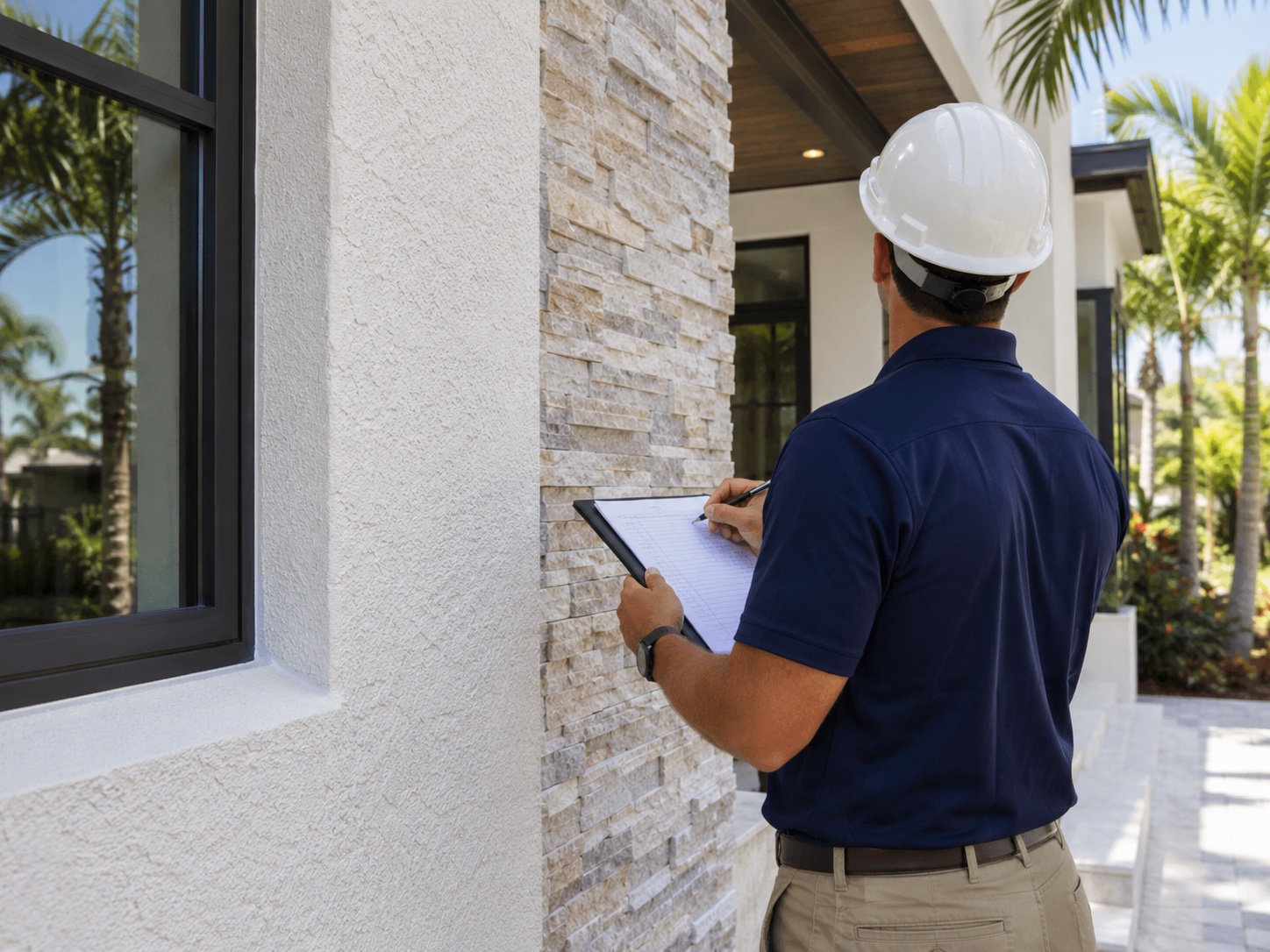
Building a custom home is a significant investment involving extensive planning, design coordination, specialized construction materials, and the work of multiple trades. Homeowners generally expect their completed residence to reflect the approved plans, contractual requirements, and intended quality of construction. However, even luxury residences can experience construction-related concerns that require further evaluation. Cloud Design Build recently provided Venetian Islands construction defect peer review services in connection with a private residence in Miami Beach, Florida. Our involvement included a site inspection, infrared thermal imaging, technical peer-review assistance, and support with technical documentation.
The matters addressed included reported moisture intrusion, waterproofing concerns, efflorescence, debonded stone tile, and cracked or debonded stucco.
The case was subsequently resolved through settlement.
This article provides a general overview of our involvement without disclosing confidential project information, detailed technical findings, or settlement terms.
Construction in the Venetian Islands of Miami Beach
The Venetian Islands are a collection of residential islands within Biscayne Bay, connected by the Venetian Causeway between mainland Miami and Miami Beach.
The six principal residential islands are Biscayne Island, San Marco Island, San Marino Island, Di Lido Island, Rivo Alto Island, and Belle Isle.
Known for their waterfront properties and custom residences, the Venetian Islands include homes featuring extensive glazing, architectural stone, stucco finishes, outdoor living spaces, and other specialized building materials.
These features can introduce complex construction details, particularly where multiple materials and exterior building systems meet.
Waterfront construction also requires careful consideration of environmental exposure. Wind-driven rain, humidity, salt-laden air, and prolonged exposure to the elements can influence how exterior materials and building assemblies perform over time.
The presence of these environmental conditions does not, by itself, establish that a particular building has a construction defect. Determining whether an observed condition is related to design, materials, installation, maintenance, environmental exposure, or another factor requires an evaluation of the available information.
Cloud Design Build’s Role in the Construction Defect Matter
Cloud Design Build was engaged to provide a peer-review assistance in connection with reported deficiencies at a private Venetian Islands residence.
Our involvement included visiting the property, observing selected building conditions, utilizing infrared thermal imaging equipment, and assisting with technical documentation related to the matter.
The review addressed several areas of concern associated with the building envelope and exterior finishes.
The building envelope refers to the components that separate a building’s interior from the outside environment. These can include exterior walls, roofing assemblies, windows, doors, waterproofing systems, and connections between different building components.
A review involving these systems may require consideration of how the components interact, rather than examining each material in isolation.
Building Conditions Addressed During the Review
The following categories summarize the construction-related conditions addressed during the assignment. They are provided as a general description of the work and do not reproduce project-specific technical findings, causation opinions, or conclusions from the underlying matter.
1. Moisture Intrusion and Building-Envelope Concerns
One of the areas addressed during the review involved reported moisture entering portions of the building envelope.
Moisture-related concerns in residential construction may involve exterior walls, windows, doors, roof-to-wall connections, waterproofing transitions, and other locations where materials or assemblies meet.
Identifying the presence of moisture is different from determining its source.
A condition observed at one location may require further evaluation to determine whether moisture originated nearby or traveled through another part of the assembly.
Accordingly, moisture intrusion investigations may involve visual observations, moisture-related measurements, thermal imaging, document reviews, or other evaluation methods appropriate to the circumstances.
2. Waterproofing Deficiencies
Waterproofing was another area addressed during the assignment.
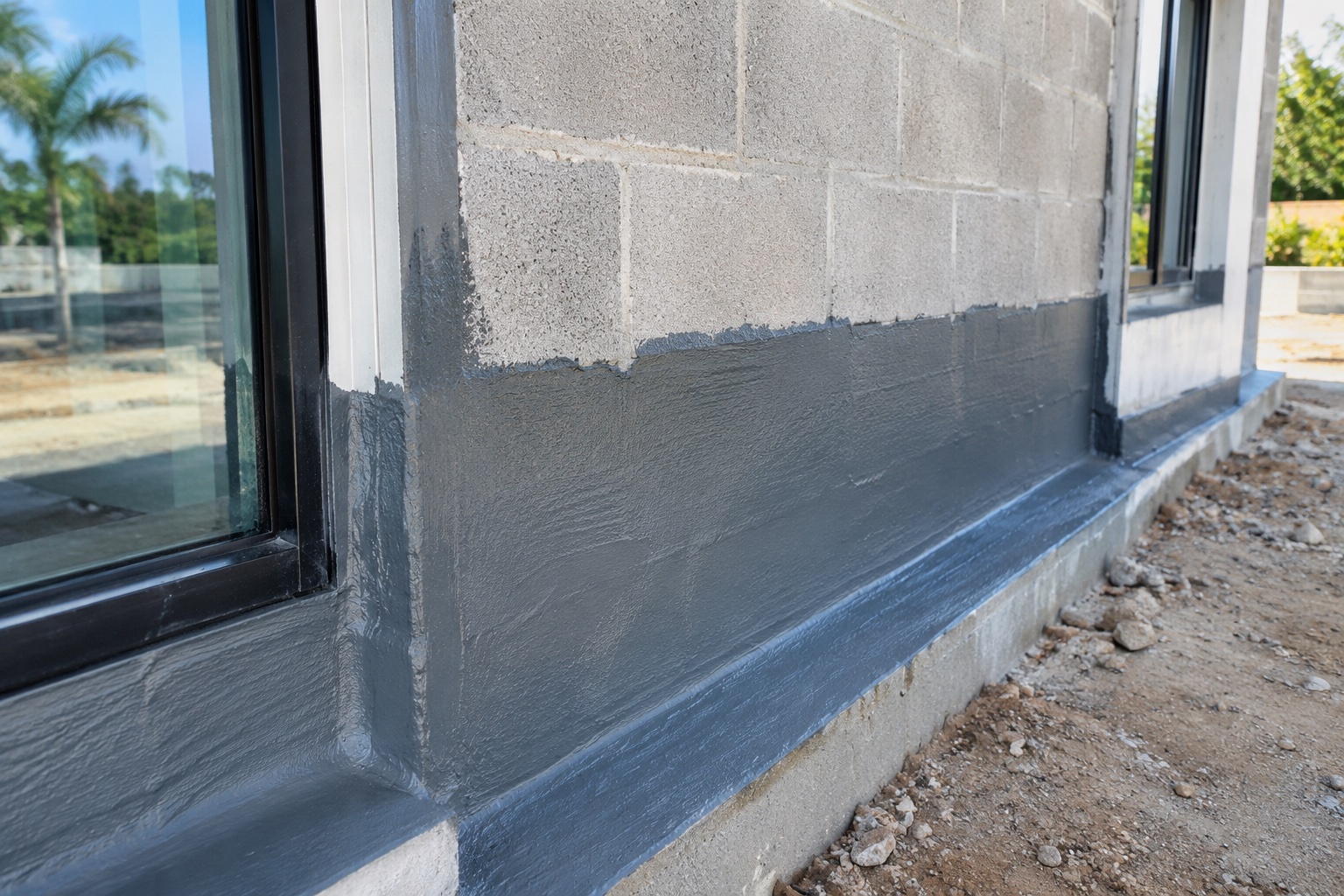
Waterproofing systems are intended to manage water exposure at designated portions of a building. Depending on the application, these systems may include membranes, coatings, flashing, sealants, drainage provisions, and other components.
Concerns about missing, incomplete, or improperly installed waterproofing can require review of the construction documents, intended assembly, material specifications, and accessible site conditions.
The appropriate waterproofing requirements depend on the particular construction detail and its intended use.
For this matter, waterproofing concerns formed part of the broader building-envelope review. The details of individual installations and related professional opinions are not discussed here.
3. Efflorescence and Visible Moisture-Related Conditions
Efflorescence is a mineral deposit that can appear on masonry, concrete, stucco, and certain other building materials.
It often develops when water moves through a material, dissolves soluble salts, and leaves deposits at the surface as moisture evaporates.
The review included concerns involving visible efflorescence and moisture-related surface conditions.
Although efflorescence can indicate moisture movement, its presence alone does not establish the cause of a construction problem or identify a particular installation deficiency.
Additional information may be necessary to evaluate the condition in the context of the building assembly.
4. Debonded Stone Tile
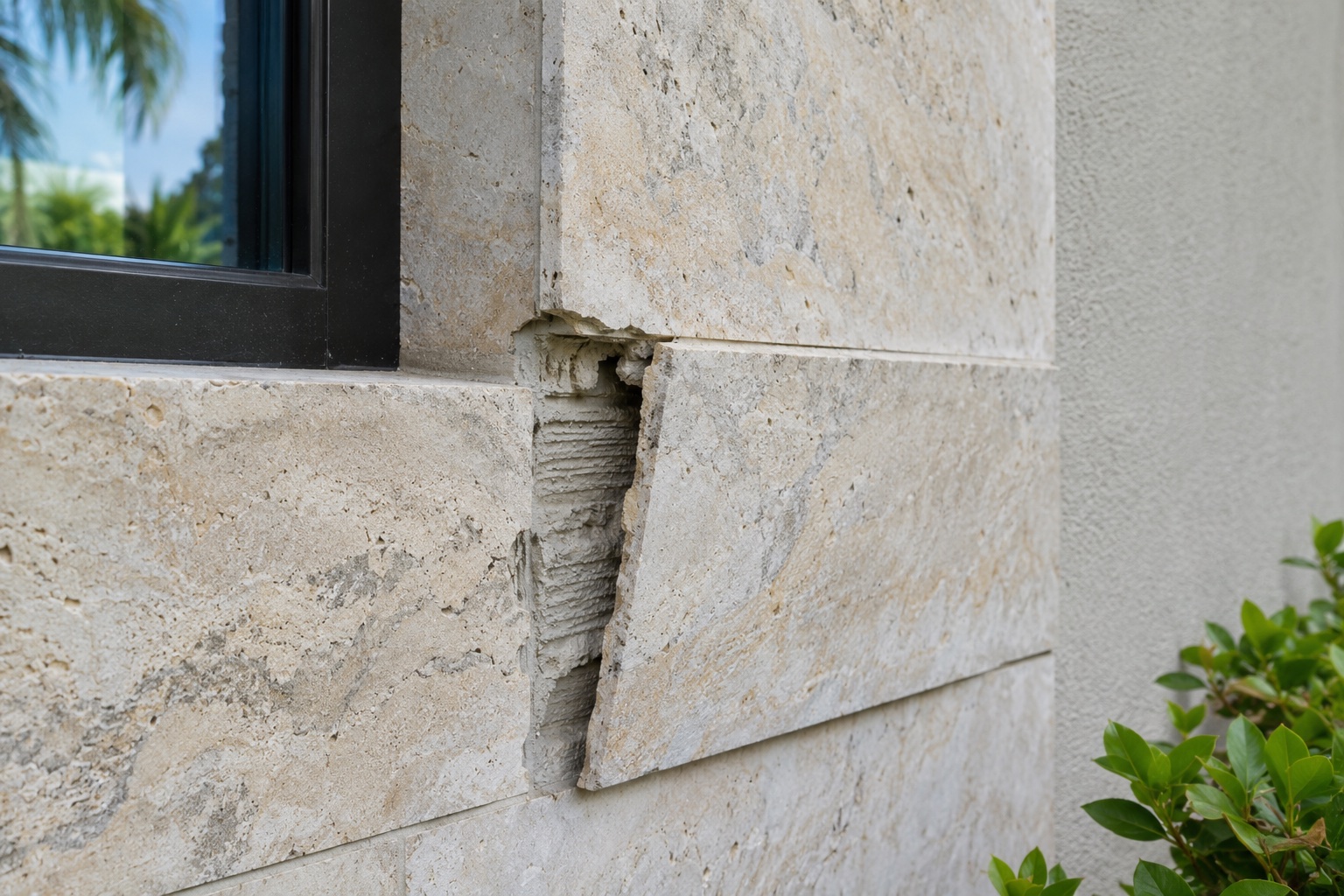
The assignment also involved concerns regarding stone tile that had reportedly experienced a loss of bond with its supporting surface.
Stone tile installations depend on several factors, including the substrate, setting materials, installation methods, environmental exposure, and movement characteristics of the assembly.
Loss of adhesion can occur under different circumstances. An evaluation may consider the condition of accessible materials, relevant installation requirements, and other available information.
For this article, the discussion is limited to the general category of tile debonding without attributing it to a particular cause.
5. Cracked and Debonded Stucco
Exterior stucco finishes were another component addressed during the review.
Stucco systems are commonly used in South Florida residential construction because of their architectural versatility and compatibility with different wall assemblies.
Cracking, separation, and loss of adhesion can affect the appearance or performance of stucco finishes.
However, not every visible crack indicates the same condition, and the significance of cracking depends on factors such as its location, pattern, extent, and the underlying assembly.
Evaluating stucco concerns may require consideration of the existing substrate, installation details, material behavior, and available construction records.
The reported stucco conditions at the Venetian Islands residence were included among the matters considered during Cloud Design Build’s consulting engagement.
Infrared Thermal Imaging During the Site Review
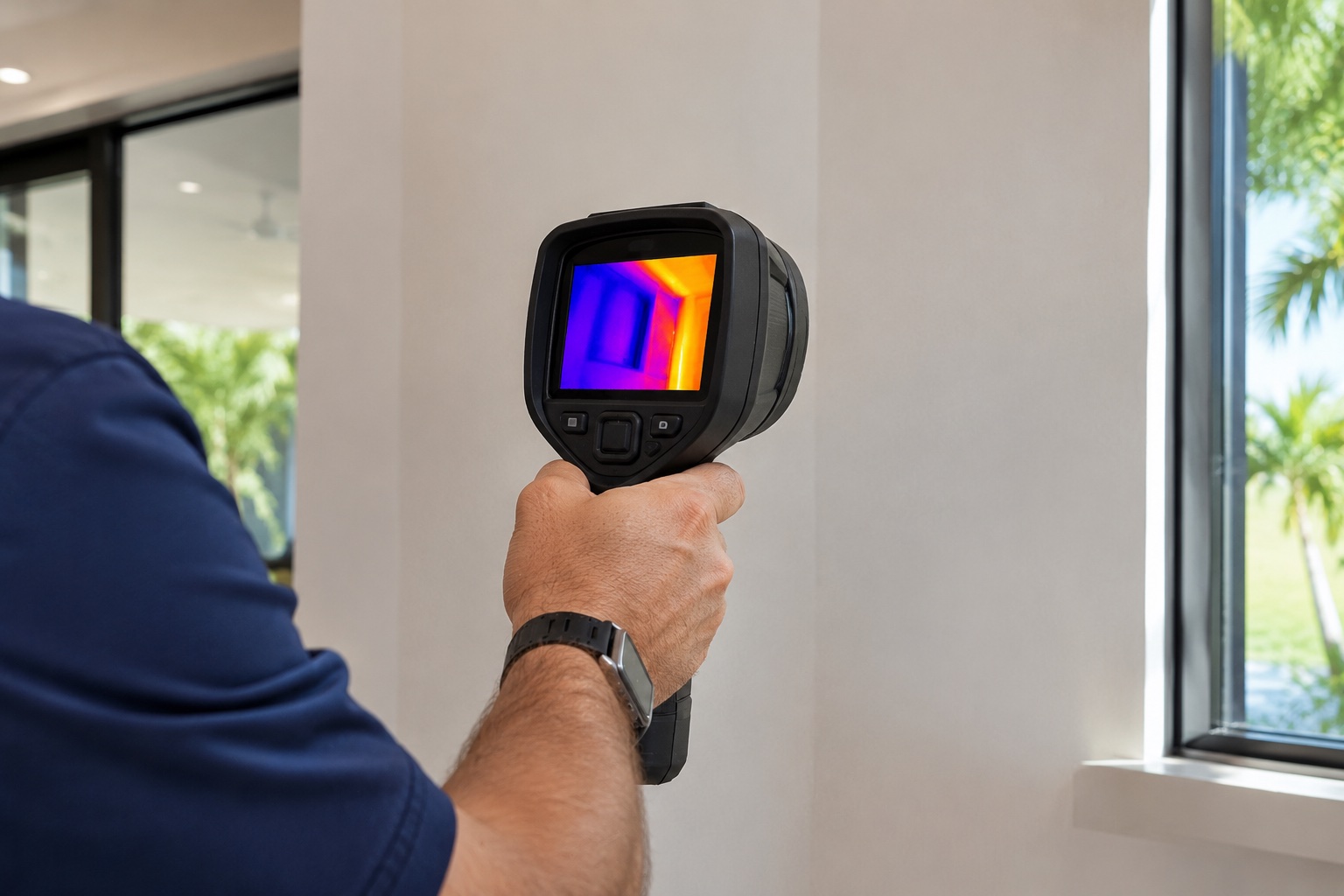
As part of the assignment, Cloud Design Build utilized an infrared thermal imaging camera.
Thermal imaging technology identifies differences in surface temperatures. In building investigations, those differences can help identify locations that may warrant additional evaluation.
For example, temperature patterns can sometimes be associated with moisture-related conditions, insulation differences, air movement, or other variations within building assemblies.
Importantly, an infrared camera does not directly measure moisture or see through walls. Thermal observations must be interpreted in context and may require confirmation through other evaluation methods.
When used as part of a broader inspection process, thermal imaging can provide additional information for evaluating areas of concern.
Cloud Design Build incorporates infrared thermal imaging into applicable construction inspection and consulting assignments, depending on the circumstances and agreed scope of work.
Technical Peer Review and Construction Documentation
Construction disputes can involve multiple technical issues, including the condition of installed work, interpretation of construction documents, and questions regarding building system performance.
Technical peer review provides an opportunity for another construction professional to examine selected materials, observations, or analyses within the scope of the engagement.
Depending on the assignment, this work may include examining available documentation, reviewing reported conditions, conducting supplemental site observations, and providing technical input.
In the Venetian Islands matter, Cloud Design Build participated in the site review and assisted with technical documentation.
The scope of our work was limited to the services performed under the engagement. This article does not disclose the underlying report, detailed analysis, communications, or opinions prepared in connection with the matter.
Case Status: Resolved Through Settlement
The Venetian Islands construction defect matter was subsequently resolved through settlement.
Cloud Design Build’s role involved peer-review support. The resolution of a legal dispute may involve numerous considerations beyond the technical work of any individual consultant.
The settlement should not be interpreted as a judicial determination regarding the alleged construction deficiencies, the responsibility of any party, or the merits of specific technical opinions.
No information regarding settlement amounts, terms, negotiations, or the identities of the parties is provided.
Construction Consulting and Expert Services in Miami Beach
Construction-related disputes may require professionals who understand both the practical aspects of building construction and the technical considerations associated with evaluating completed work.
Cloud Design Build provides construction consulting, inspection, and expert witness services across South Florida and throughout the state.
Led by James J. Cloud, a Florida Licensed Certified General Contractor with experience in residential and commercial construction, the firm assists with matters involving construction defects, building-envelope concerns, contractor standard of care, building code compliance, and construction claims.
Our services may include site inspections, review of construction documents, technical consulting, peer-review support, and written reporting, depending on the scope of the engagement.
Questions people ask us
What is a construction defect peer review?
It is a review of another professional’s report or findings about a home, done by a second qualified professional. The scope is set in writing and varies by engagement.
Does a peer review mean the original report is wrong?
No. A peer review is a second look. What it concludes depends on the documents and the facts, and no one can say in advance.
How long does a peer review take?
It depends on the scope, the size of the property, and access to it, so we cannot give a number. The schedule is set when the engagement begins.
Can I send you my report?
Contact us first. A first conversation does not create an engagement, and we ask that you not send privileged or confidential materials until an engagement and a conflict check are in place.
Talk to us
If you are a consultant considering a peer review, or a law firm looking for a construction expert, call or email before sending any documents.
Talk to James · Call 305-537-6105 · info@clouddesignbuild.com
To see the services we offer, visit Construction Claims Consulting.
Related reading
• Top 5 Construction Defects in Florida Homes & Buildings
• How to Hire a Construction Expert Witness in Florida
• Why an ICC-Certified Residential Building Inspector Is Important
Editorial note: This article presents a limited, generalized description of a construction consulting engagement. It does not disclose confidential project information, provide a complete account of the inspection, or reproduce technical findings or expert opinions. The discussion is for general informational purposes and does not constitute legal advice or an assessment of another property’s condition. No particular result is represented or guaranteed.