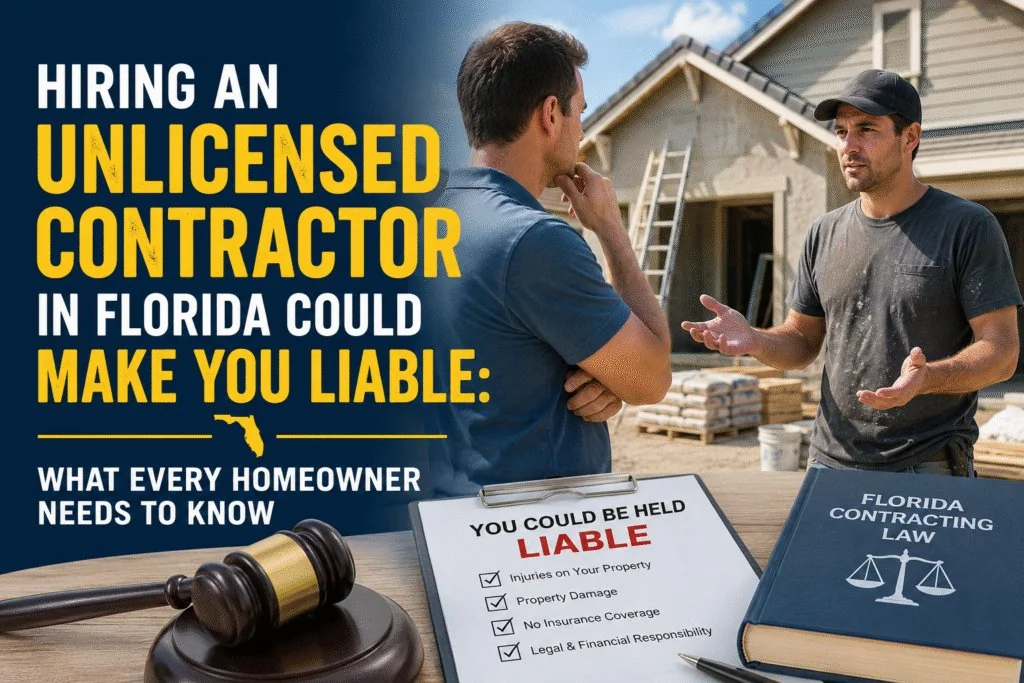
The Reality of Unlicensed Contracting in Florida
Florida has one of the most active construction markets in the country. With that comes a significant number of individuals and companies operating without the proper licensing. Unlicensed Contractor
What makes this especially dangerous is how difficult it can be to spot.
A contractor may have a professional-looking website, a polished proposal, and even a license number they reference. But that does not always mean they are legally qualified to perform the work on your specific project, or that the company you hired is the one actually licensed.
We have seen this situation play out in legal cases. The results are serious.
What Most Homeowners Do Not Know to Check
The License Belongs to a Person, Not Always the Company
This is one of the most misunderstood aspects of contractor licensing in Florida.
A licensed general contractor can qualify a business organization, which means their license allows that company to operate legally. But if you hire a different company, even one connected to that same individual, you may be hiring an unlicensed entity.
Under Florida Statute 489.127, it is illegal to engage in contracting without being duly licensed or certified. And under Florida Statute 489.128, any contract entered into by an unlicensed contractor is unenforceable.
That means if something goes wrong, you may have no legal remedy against them.
Pulling a Permit Does Not Confirm Licensing
Many homeowners believe that if a permit was pulled, the contractor must be legitimate. That is not always the case.
Permits can be applied for under different company names, and the license used to pull the permit may not belong to the entity you have a contract with. This is a critical distinction that most homeowners would never think to verify.
What Happens When Things Go Wrong
When unlicensed contracting leads to injury, property damage, or financial loss, the consequences can extend far beyond the contractor.
Florida law places responsibility on property owners as well.
Under Broward County Code of Ordinances Section 9-120(d), for example, it is prohibited for a property owner to hire or contract with an uncertified or unregistered contractor. Similar provisions exist across Florida counties.
If a licensed construction professional hires an unlicensed contractor, or if a property owner knowingly or unknowingly allows unlicensed work to proceed, they can be found to have failed to exercise reasonable care. That finding can significantly impact the outcome of any legal dispute.
We were recently retained as a construction expert witness in a case involving exactly this issue. After a thorough review of the licensing records, permit history, and applicable Florida Statutes, we prepared a detailed expert affidavit on behalf of the injured party.
The case settled before we were ever deposed.
That is what a well-prepared, credible expert opinion does. It does not just support litigation. It can resolve it.
How to Protect Yourself Before You Hire Anyone
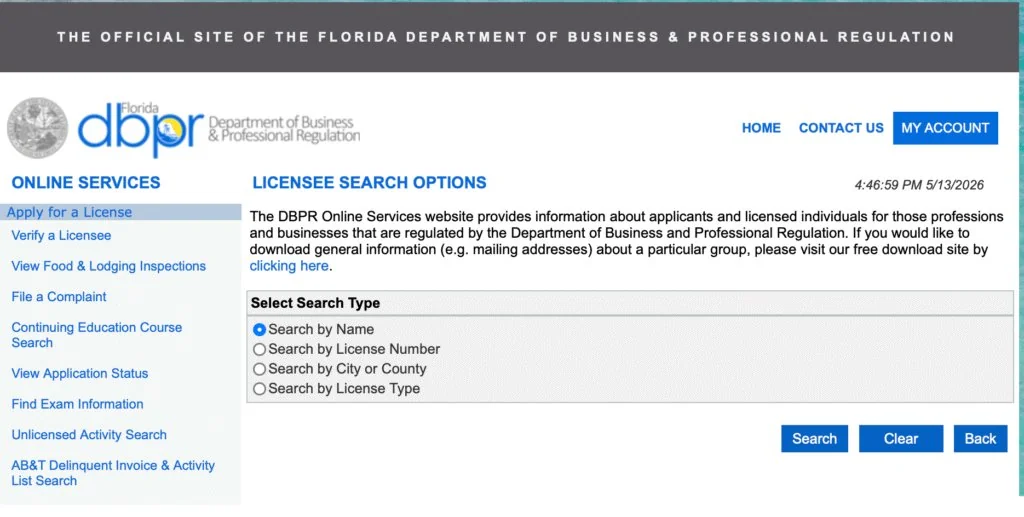
Step One: Verify the License on DBPR.com
The Florida Department of Business and Professional Regulation maintains a free, publicly accessible database at DBPR.com. Before signing any contract, look up the contractor’s license and confirm it is current and active.
This takes less than two minutes and could save you thousands.
Step Two: Confirm the License Qualifies the Company You Are Hiring
Do not just verify that an individual holds a license. Confirm that the specific company you are entering a contract with is qualified under that license.
Ask directly: Is your license the qualifying license for this company? Get it in writing.
Step Three: Do Not Let Urgency Override Due Diligence
Unlicensed contractors often push for quick decisions. They may offer a lower price if you sign today, or suggest the project needs to start immediately.
Legitimate contractors do not require you to skip the verification process.
Step Four: Put Everything in Writing
Every agreement should be in writing and should include the contractor’s full legal name, company name, license number, and scope of work. If they resist, that is a red flag.
Step Five: Consult an Expert Before You Sign
Whether you are reviewing a contract, evaluating a bid, or trying to understand your rights after something has already gone wrong, speaking with a construction expert before you act can make a significant difference.
What the Florida Department of Business and Professional Regulation Advises
The DBPR and county building code divisions across Florida advise homeowners to verify contractor licensing before hiring anyone for construction work. This is not just a recommendation. In many Florida counties, hiring an unlicensed contractor is itself a violation of local ordinances.
Beyond the legal exposure, hiring an unlicensed contractor can:
- Void your homeowner’s insurance coverage for that work
- Result in unpermitted construction that affects your ability to sell the property
- Leave you with no legal recourse if the work is defective
Expose you to liability if someone is injured during the project
When You Need an Expert in Your Corner
If you are a homeowner, property owner, or attorney dealing with a construction dispute involving unlicensed contracting, you need someone who understands both the technical and legal dimensions of the issue.
At Cloud Design Build, we provide construction consulting and expert witness services for property owners, developers, law firms, and insurance carriers across Florida and nationally.
Our background includes:
- Florida General Contractor License
- Florida Roofing, Mechanical, Plumbing, and Pool/Spa Contractor Licenses
- ICC Commercial and Residential Building Inspector Certifications
- OSHA 30 Certification
- BS in Construction Management and MS in International Real Estate, Florida International University
- Nearly a decade of project leadership experience with AECOM on major developments including Miami World Center and Hard Rock Stadium
We have provided expert affidavits, deposition testimony, and consulting support in construction defect, unlicensed contracting, property damage, and personal injury matters.
Contact us today to discuss your situation.
Frequently Asked Questions
In many Florida counties, yes. Local ordinances prohibit property owners from knowingly hiring unlicensed contractors. Even where it is not explicitly illegal, doing so exposes you to significant financial and legal risk.
In Florida, a licensed individual must formally qualify a business organization through the Construction Industry Licensing Board. That means their license covers the operations of that specific company. If the company you hired is not qualified under a valid license, it is operating illegally.
Yes. The Florida DBPR maintains a free license verification database at DBPR.com. You can search by name, company, or license number to confirm whether a contractor is currently licensed and in good standing.
If an unlicensed contractor causes damage or injury, the contract may be unenforceable under Florida Statute 489.128. This can significantly limit your ability to recover damages. In some cases, the property owner may also share liability if they failed to verify licensing before hiring.
A construction expert witness is a licensed construction professional retained by attorneys or property owners to analyze construction-related disputes. They review records, inspect properties, and prepare expert opinions or affidavits that are used in litigation. A strong expert opinion can influence the outcome of a case significantly, sometimes leading to settlement before a case ever reaches deposition.
Yes. We provide construction expert witness services and consulting support for property owners, developers, and law firms handling construction defect, unlicensed contracting, property damage, and related matters across Florida and nationally. Contact us to discuss your situation.
You can verify this through your county building department, which maintains permit records tied to license numbers. You can also cross-reference those license numbers on DBPR.com to confirm they were valid at the time of the work and that they covered the company that performed it.